Essential Motorbike Safety Checks
You’ll Want to Carry out Before Every Ride
Whether you’re riding to work on a damp Monday morning or heading out for a long summer blast through the countryside, carrying out a few basic motorbike safety checks before every ride can make a huge difference. It only takes a couple of minutes, but those few minutes could prevent mechanical problems, improve your safety, and even extend the life of your motorbike.
Many experienced riders develop a quick routine before they set off. It’s not complicated and it doesn’t require tools. A simple visual inspection combined with a few quick checks can help you spot potential issues before they turn into expensive repairs or dangerous situations on the road.
In the UK, road conditions, weather changes, and everyday wear and tear can all take a toll on your bike. Potholes, grit, moisture, and long periods of storage during winter can affect tyres, suspension components, fluids, and electrical systems. That’s why a pre-ride motorcycle inspection is something every rider should get into the habit of doing.
Let’s walk through some of the most important motorbike safety checks you should make before riding your motorcycle.
Start With the Tyres
Your tyres are the only contact point between your motorcycle and the road, so they deserve attention before every ride. Even a quick glance can reveal problems that might otherwise go unnoticed until you’re already on the move.
Look closely at both the front and rear tyre for any visible cracks, cuts, or objects lodged in the rubber. Nails, screws, or sharp stones can easily become embedded in the tread, particularly if you’ve recently ridden through roadworks or car parks where debris tends to gather. Motorcycle tyres can sometimes hold air even with a small object stuck in them. This which means you might not realise there’s an issue until the tyre suddenly begins to lose pressure. Spotting the problem early can save you from dealing with a puncture miles from home.
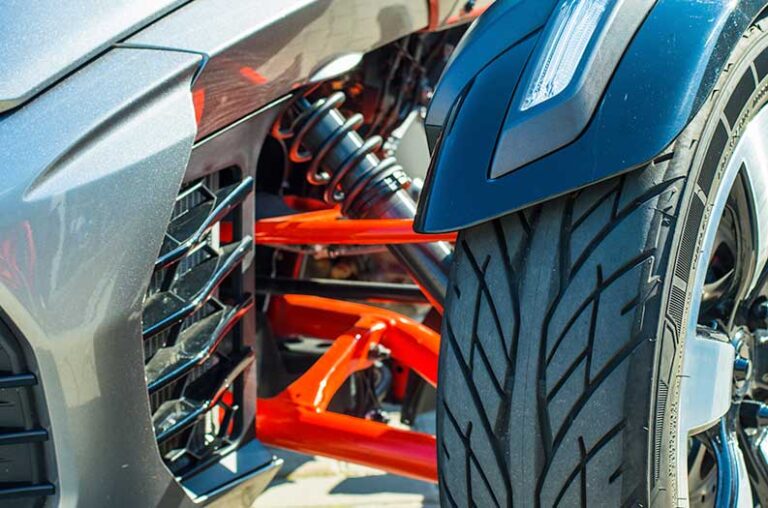
It’s also worth checking the overall condition and tread depth. UK law requires motorcycle tyres to have a minimum tread depth of 1mm across three-quarters of the tyre width. But most riders prefer to replace them well before reaching that limit to maintain proper grip, especially in wet conditions. A quick squeeze or visual check will also help you spot tyres that look under-inflated. Riding with the wrong tyre pressure affects handling, braking, and tyre wear, so keeping them in good condition is essential for both safety and performance.
Check Your Engine Oil and Brake Fluid
Motorcycle engines rely heavily on clean, properly maintained oil. Before heading out, take a moment to check the engine oil level using either the dipstick or the sight glass window, depending on your bike’s design.
Most motorcycles have a small inspection window on the engine casing where you can easily see the oil level when the bike is upright. If your bike uses a dipstick instead, simply remove it, wipe it clean, reinsert it, and check the level. Oil that sits below the recommended level can lead to increased engine wear, overheating, and reduced performance. Keeping an eye on it regularly ensures your engine stays properly lubricated and running smoothly.
While you’re checking fluids, it’s also a good idea to glance at the brake fluid reservoir, which is usually located on the handlebars for the front brake. The small window on the reservoir allows you to quickly confirm that the fluid level sits between the minimum and maximum markers. Brake fluid naturally degrades over time, and low levels could indicate worn brake pads or a potential leak somewhere in the braking system. Either way, it’s something you’ll want to investigate before riding.
Make Sure All Lights Are Working
Motorcycle lighting plays a vital role in road safety, especially in the UK where weather and visibility can change quickly. A quick check of your bike’s lights ensures you remain visible to other road users.
Start by turning the ignition on and checking the headlight, both on dip beam and main beam. Then move around the bike and confirm the rear light and brake light are functioning correctly.
Don’t forget the indicators, both front and rear. Motorcycle indicators are often smaller than those found on cars, which means they can be easier to miss if one stops working.
Many modern motorcycles now use LEDs, which are extremely reliable and long-lasting, but they can still fail occasionally. Older bikes with traditional bulbs may need replacements more frequently, particularly if the bike has been stored for a while or ridden on rough roads where vibration can affect components. Ensuring all your lights are working properly is a simple step that helps other road users see your intentions clearly.
Inspect the Suspension and Fork Seals
Motorcycle suspension works incredibly hard, absorbing bumps, potholes, and uneven road surfaces every time you ride. Over time, components can wear, and one area that deserves attention is the front fork seals.
Fork seals are responsible for keeping the suspension oil contained within the forks while preventing dirt and debris from entering. As the seals age, they can become brittle and begin to leak. Take a quick look at the front forks, particularly near the seals. If you notice oil residue or streaks running down the fork tubes, it may indicate a leaking seal.
This is especially important for bikes with upside-down (USD) forks, which are common on many modern sport and performance motorcycles. When these seals begin to leak, oil can potentially make its way down towards the brake components.
Any oil contamination on the brake discs or pads can significantly reduce braking performance, which is why spotting fork seal leaks early is so important.
Why Regular Motorbike Safety Checks Matter
Motorcycles are precision machines, and even small mechanical issues can affect how safely they operate. Performing these quick motorbike safety checks before each ride helps catch problems early and keeps your bike running reliably.
It also gives you a better understanding of your motorcycle’s condition. Riders who regularly inspect their bikes tend to spot unusual changes more quickly, whether that’s a slow tyre puncture, a drop in fluid levels, or worn components that need attention. In many cases, these simple observations can prevent small issues from becoming expensive repairs.
There’s also a resale benefit. Well-maintained motorcycles with clear signs of regular care are far more attractive to buyers in the used market. When it eventually comes time to sell your motorbike, having looked after it properly can make a noticeable difference to its value.
Ride Safe and Enjoy the Road
Motorcycling is one of the most enjoyable ways to travel. The sense of freedom, the connection to the road, and the sheer excitement of riding are why so many people fall in love with bikes in the first place.
But like any vehicle, motorcycles rely on proper maintenance and regular checks to stay safe and reliable. Taking a couple of minutes before each ride to look over your tyres, fluids, lights, and suspension is a small effort that can make a big difference. It’s a simple habit that every rider, from beginners to seasoned bikers, should build into their routine.
Stay safe out on the roads and remember to follow Sellyourbiketoday.com for more motorcycle tips, riding advice, and helpful guides for bikers across the UK.

An extremely easy sale, no tyre-kickers, no stress! SellYourBikeToday.com is ready when you are.