
Selling a motorcycle should be fairly straightforward. You advertise your bike, answer a few questions, agree on a price and arrange for the buyer to collect it.
At least, that’s how it’s supposed to work.
Unfortunately, selling anything valuable online now comes with risks that didn’t exist in quite the same way a decade ago. Fake payment confirmations, convincing banking apps, fraudulent buyers and increasingly sophisticated online scams have made it more important than ever to know exactly who you’re dealing with. And when the item you’re selling is a motorcycle worth several thousand pounds, making a mistake can be particularly expensive. The good news is that most motorcycle sales are perfectly legitimate. Thousands of bikes change hands privately across the UK every year without any problems. But knowing what to look out for could save you a great deal of money, stress and inconvenience.
Online Fraud Is Still a Major Problem in the UK
The latest figures from UK Finance demonstrate just how widespread financial fraud has become. According to its Annual Fraud Report 2026, criminals stole approximately £1.28 billion through payment fraud during 2025, an increase of 4% compared with the previous year. The report also found that authorised push payment fraud, where criminals manipulate victims into making payments, increased by 19%. These figures cover financial fraud across the UK, not motorcycle sales specifically.
However, they highlight a wider problem that affects anyone buying or selling valuable items online. Criminals are becoming increasingly convincing.
A fraudulent buyer doesn’t necessarily arrive looking suspicious or behave aggressively. They might appear perfectly normal, ask sensible questions about your motorcycle and even spend time discussing its service history. The problems often begin when it’s time to exchange money.
Fake Banking Apps and Payment Confirmations
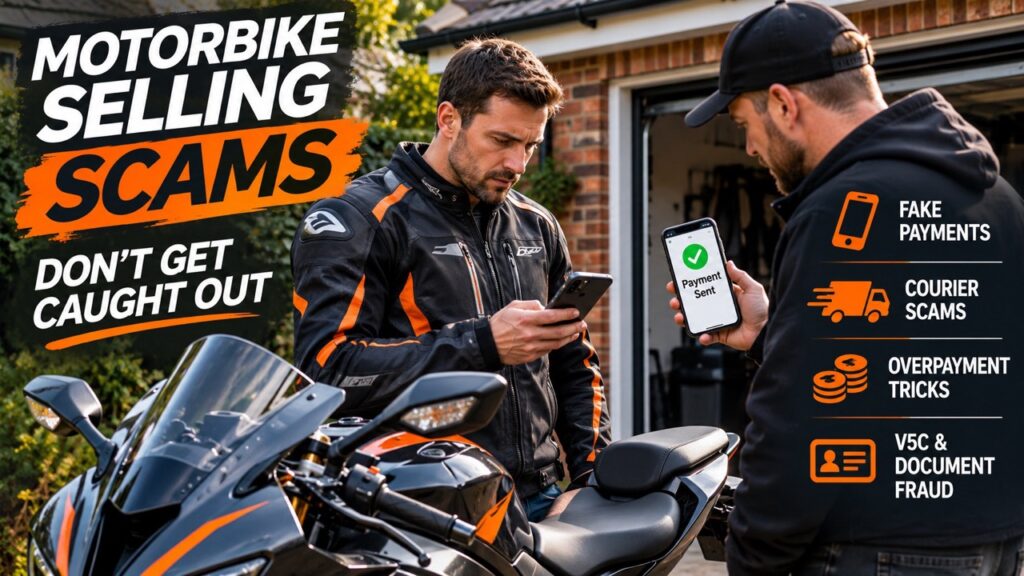
One of the most concerning scams affecting private sellers involves fake banking applications. The idea is relatively simple.
A buyer arrives to collect an item and agrees to pay by bank transfer. They open what appears to be a legitimate banking app, enter the seller’s details and show a screen confirming that the payment has been sent. Everything looks genuine. There’s a payment reference, the correct amount and perhaps even a convincing transaction confirmation. But the money hasn’t actually been transferred. The application or confirmation screen is fake.
This isn’t simply a hypothetical scenario. UK police have issued warnings about criminals using fraudulent banking apps when purchasing items advertised online. For a motorcycle seller, the consequences could be serious. Imagine agreeing to sell your bike for £6,500. The buyer shows you a payment confirmation, you hand over the keys and V5C paperwork, and they leave. Only afterwards do you discover that your bank account never received the money.
How to protect yourself
Never rely on a screenshot, email, text message or payment confirmation displayed on somebody else’s phone. Check your own banking app independently. Make sure the money has actually arrived in your account and is available. If anything looks unusual, contact your bank using its official contact details. And most importantly, don’t hand over the motorcycle simply because somebody claims the payment has been made.
The Buyer Who Wants to Send a Courier
Another warning sign is a buyer who seems unusually keen to purchase your motorcycle without viewing it. They might contact you through an online advert and immediately agree to your asking price.
No negotiation, questions about the condition and no interest in the service history. Instead, they explain that they’re working abroad, travelling or otherwise unable to collect the motorcycle personally. They’ll arrange a courier or transport company to collect it. Of course, there are genuine buyers who purchase motorcycles remotely. People regularly buy vehicles from other parts of the country, particularly unusual or desirable models.
The warning sign is what happens next. A fraudulent buyer may send a fake payment confirmation or claim that you need to pay an insurance, transport or release fee before the collection can proceed. Sometimes the supposed courier company is part of the scam. If somebody asks you to send money in order to receive payment for a motorcycle you’re selling, that’s a major reason to stop and investigate. You shouldn’t have to pay an unexpected third-party fee to access money supposedly being sent to you.
The Overpayment Scam
This is another trick that can catch people out. You agree to sell your motorcycle for £4,000 but the buyer then claims they’ve accidentally transferred £4,500. They ask you to refund the additional £500. It might sound like an innocent mistake but if the original payment notification is fraudulent, or the payment is otherwise not legitimate, you could end up sending £500 of your own money to a criminal.
The safest approach is to avoid making separate refunds to somebody you don’t know without first verifying the original transaction with your bank. If a genuine payment error has occurred, contact your bank and ask how it should be handled. Don’t let an unfamiliar buyer rush you into transferring money to a different account.
Fake Vehicle History Checks
Not every motorcycle scam involves somebody attempting to steal the bike. Some are designed to steal smaller amounts of money from large numbers of sellers. A common warning sign is a prospective buyer insisting that you purchase a vehicle history report from a particular unfamiliar website.
They might say:
“I’m definitely interested, but I need you to run the bike through this website first.” The website may look professional. It might promise a comprehensive history check, finance information, accident records or stolen vehicle checks. But the real purpose could be to collect your card details or charge you for a worthless report. There’s nothing wrong with a genuine buyer wanting to check a motorcycle’s history.
In fact, that’s sensible. However, you should be suspicious if somebody insists that you, as the seller, must pay an unfamiliar website before they’ll even consider viewing the motorcycle. Use established vehicle-check providers where appropriate, and never enter payment details into a website simply because an unknown person has sent you a link.
Be Careful Who You Invite to Your Home
Selling a motorcycle privately often means inviting strangers to your property. That’s understandable. The bike might be stored in your garage, and a buyer will naturally want to inspect it before making a decision. But it’s worth remembering that you’re potentially showing somebody where an expensive motorcycle is kept.
A prospective buyer might also see other vehicles, tools, equipment and security arrangements. Most people viewing motorcycles are genuine enthusiasts. Nevertheless, sensible precautions are worthwhile. Arrange viewings during daylight where possible. Have another adult present. Avoid showing strangers unnecessary details of your garage, storage arrangements or other valuables. And if something about a buyer’s behaviour makes you uncomfortable, you don’t have to continue with the viewing.
The Test Ride Problem
This is one of the biggest concerns for private motorcycle sellers. A buyer arrives, inspects the bike and asks to take it for a quick ride. That seems reasonable. After all, most people wouldn’t want to spend thousands of pounds on a motorcycle without knowing that it rides properly. But allowing an unknown person to ride your motorcycle creates several potential problems. What if they don’t return, crash or damage the bike? What if their insurance doesn’t cover them to ride it?
Never assume that somebody’s own motorcycle insurance automatically allows them to ride your bike. Driving or riding other vehicles cover is not universal, and the terms can vary significantly. If you’re considering allowing a test ride, check that suitable insurance cover is genuinely in place and that you’re satisfied with the arrangements. You’re also perfectly entitled to decline a test ride. A genuine buyer might be disappointed, but that doesn’t mean you should take a risk you’re uncomfortable with.
Protect Your V5C Logbook
Your motorcycle’s V5C registration certificate contains information that should be handled carefully. The DVLA specifically warns vehicle owners not to share photographs or copies of their V5C or disclose its document reference number unnecessarily. This information can potentially be misused to obtain fraudulent documentation or facilitate vehicle cloning. A genuine buyer may reasonably want to inspect the V5C to check that the vehicle details match.
That’s different from sending photographs of the entire document to an unknown person online. Keep the document secure until the sale is completed. When the motorcycle changes hands, make sure the appropriate DVLA notification is completed and the correct paperwork is provided. Remember that the V5C identifies the registered keeper; it isn’t, by itself, proof of legal ownership.
Don’t Forget to Notify the DVLA
Once you’ve sold your motorcycle, there is still an important administrative step to complete. You must notify the DVLA that the vehicle has changed hands. This can normally be done online. Failing to update the registered keeper details can create unnecessary complications, particularly if the motorcycle is subsequently used on the road. When the DVLA has been notified correctly, the vehicle tax is cancelled and any eligible refund for full remaining months is processed. The new keeper must arrange their own vehicle tax or declare the motorcycle off the road as appropriate. It’s a relatively simple step, but one that shouldn’t be forgotten.
Is Selling Privately Worth the Extra Money?
This is where every motorcycle owner has to make their own decision. Selling privately can sometimes achieve a higher price than selling directly to a motorcycle dealer or buying company. That’s because a business purchasing a motorcycle needs to account for preparation, overheads, resale costs and a margin. But the higher potential selling price comes with additional responsibilities. You need to advertise the motorcycle. Take photographs. Answer enquiries. Arrange viewings. Deal with negotiations. Check payments. Manage the paperwork. And potentially spend several weeks waiting for a suitable buyer.
For some people, that’s absolutely worthwhile. If you have a rare motorcycle, plenty of time and experience dealing with private buyers, you may be perfectly comfortable handling everything yourself. For others, the additional money simply isn’t worth the inconvenience. Particularly when the motorcycle is already sitting unused and the owner just wants a straightforward sale.
What About Selling to a Motorcycle Buying Company?
Selling directly to an established motorcycle-buying company offers a different approach. Rather than advertising the bike and waiting for private buyers, you provide details of your motorcycle and receive a valuation. If you’re happy with the agreed price, the collection and payment process can then be arranged.
This doesn’t mean you should automatically trust every business that contacts you. It’s still important to check who you’re dealing with. Look for genuine customer reviews, clear contact information, an established website and a straightforward explanation of how payment and collection work. Be cautious of anyone who asks you to pay unexpected fees or pressures you into handing over the motorcycle before payment has been properly verified. A reputable buyer should be able to explain the process clearly and answer reasonable questions. The biggest advantage for many sellers is convenience. There’s no need to spend weeks advertising the motorcycle, dealing with strangers or arranging multiple viewings. And for owners who are uncomfortable with the risks associated with private sales, that peace of mind can be worth a great deal.
A Safe Motorcycle Sale Starts With a Few Simple Rules
Whether you’re selling a £1,500 commuter or a £20,000 superbike, the same basic precautions apply. Take your time. Check who you’re dealing with. Don’t trust payment screenshots. Protect your documents. Think carefully before allowing test rides and don’t hand over your motorcycle until satisfied that the agreed payment has genuinely been received.
Most importantly, remember that you are in control of the sale. If something doesn’t feel right, you can walk away. There’s always another buyer.
Sell Your Motorbike Without the Hassle of Private Advertising
At SellYourBikeToday.com, we understand that not everybody wants to spend their spare time advertising a motorcycle, answering messages and arranging viewings with strangers. That’s why we offer a straightforward way to sell your motorbike. Simply provide us with the details of your motorcycle and we’ll give you a tailored valuation.
If you’re happy to proceed, we can arrange collection from your location anywhere in the UK, with payment made directly to you as part of the agreed collection process. No need to advertise privately. Zero endless messages from potential buyers and absolutely no strangers arriving at your home for test rides. Just a straightforward way to turn your motorcycle into money.
Ready to sell your motorbike securely?
Tell us about your motorcycle and receive a tailored, no-obligation valuation. If you accept our offer, we can arrange a convenient collection and transfer your payment as part of the handover.
Alternatively, call our team on 0800 009 6020.
Sell Your Bike Today: agreed offer, confirmed payment, secure handover.
What is the safest way to receive payment for a motorbike?
Use a payment method you understand and can independently verify. If receiving a bank transfer, check your own account and confirm the funds have arrived before handing over the motorcycle.
Can somebody fake a bank transfer confirmation?
Yes. Fraudsters have used fake banking applications, screenshots and payment messages to convince sellers that money has been transferred when it hasn’t.
Should I allow somebody to test ride my motorcycle?
Only if you’re comfortable with the arrangement and suitable insurance is confirmed. You are not obliged to allow a private buyer to test ride your motorcycle.
Can I sell my motorbike without advertising it privately?
Yes. Motorcycle-buying companies can provide valuations and arrange purchases directly, avoiding the need to create private advertisements and organise viewings.
Do I need to tell the DVLA when I sell my motorbike?
Yes. You must notify the DVLA when your motorcycle changes hands, including when selling to a motor trader.